All vintage watches
-
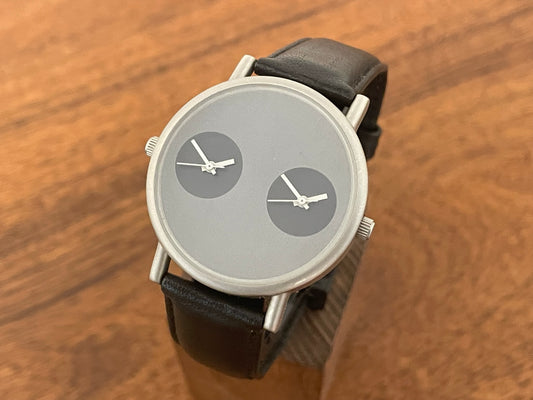
(1990s) Grus Watch dual time dress watch (NOS)
Regular price €0,00 EURRegular price -
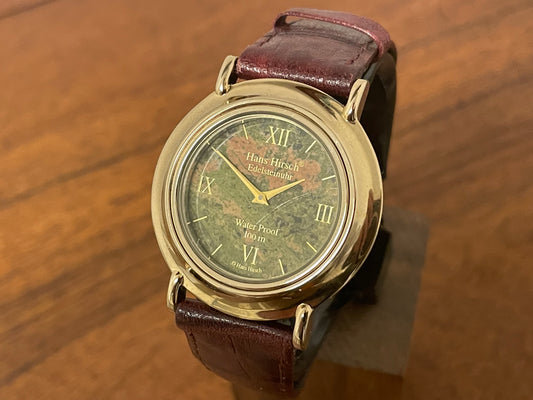
(1990s) Hans Hirsch Edelsteinuhr dress watch with gemstone dial (serviced)
Regular price €0,00 EURRegular price -
(1990s) Seiko 7N01-0BA8 18K gold collection "tank" - 18k solid gold case - white & cream dial (NOS + full set)
Regular price €0,00 EURRegular price -
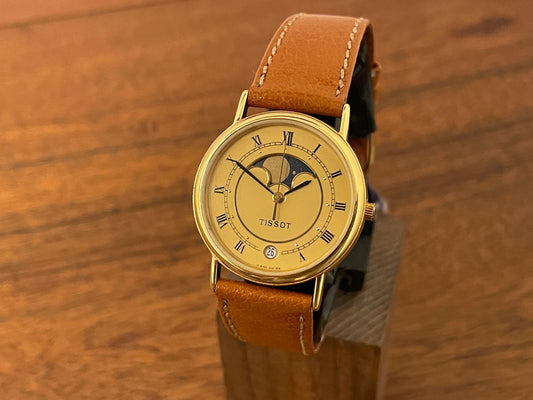
(1990s) Tissot C240 dress watch - sand dial w/ moonphase complication (NOS)
Regular price €0,00 EURRegular price -
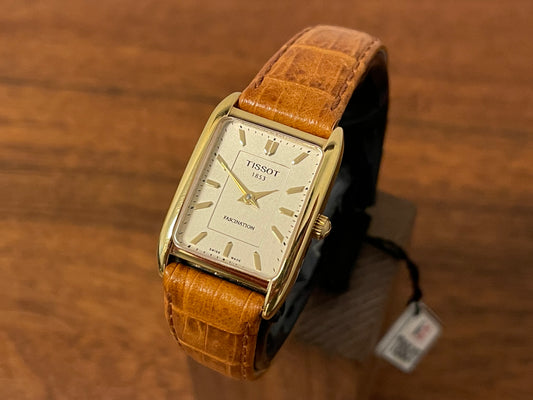
(1990s) Tissot T815 Fascination "Tank" - champagne dial with gold markers - small size (NOS)
Regular price €0,00 EURRegular price -
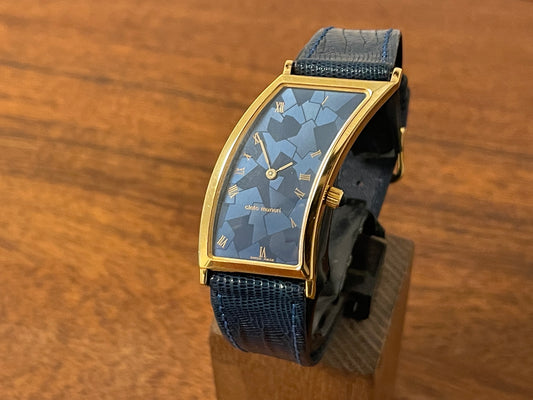
(1991) Cleto Munari "Parentesi" by Hans Hollein - asymmetrical 18K gold electroplated case - blue enamel dial (NOS + full set)
Regular price €0,00 EURRegular price -
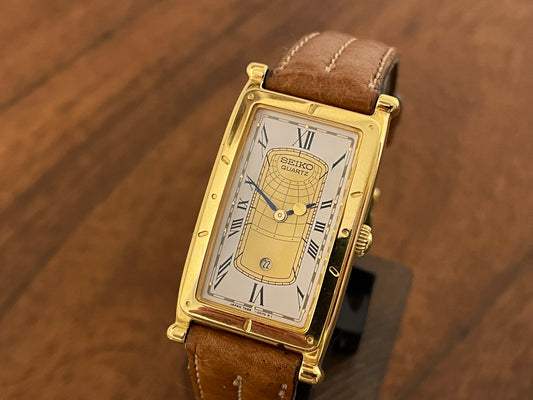
(1991) Seiko 7N89-5000 Age of Discovery (AOD) "Tank" dress watch - white/gold dial w/ Roman numerals (NOS)
Regular price €0,00 EURRegular price -
(1991) Seiko 7T32-6C5A Chronograph Sports 100
Regular price €0,00 EURRegular price -
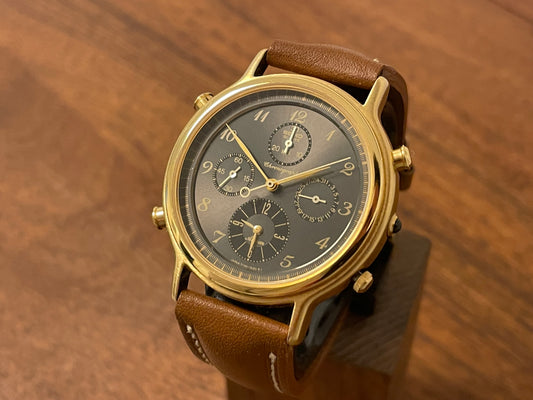
(1991) Seiko 7T34-7A3B chronograph alarm - gold case w/ grey sunburst dial (NOS)
Regular price €0,00 EURRegular price -
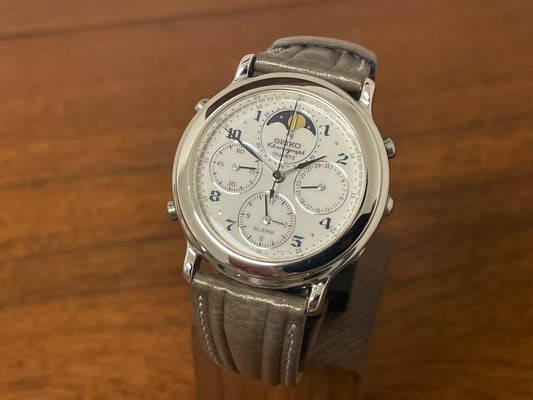
(1991) Seiko 7T36-7A00 chronograph - silver colored case - white dial w/ moonphase & Arabic numerals (NOS)
Regular price €0,00 EURRegular price -
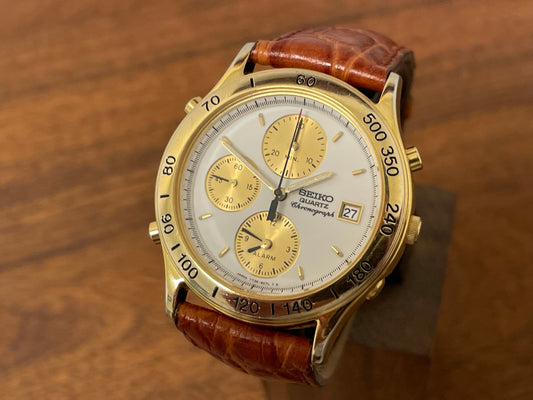
(1991) Seiko 7T36-7A10 Age of Discovery (AOD) chronograph - gold colored case - cream dial w/ moonphase (NOS)
Regular price €0,00 EURRegular price -
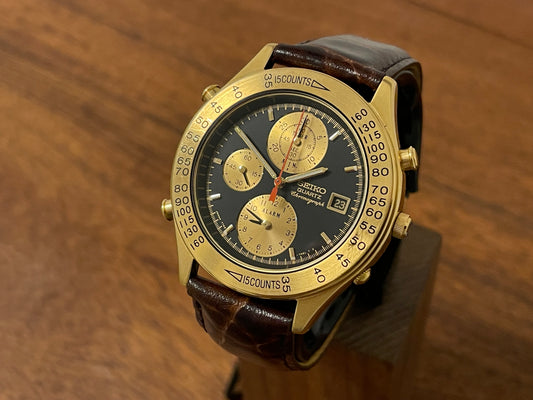
(1991) Seiko 7T42-7A4A “John Player Special” chronograph - gold case, black dial w/ gold markers (NOS)
Regular price €0,00 EURRegular price -
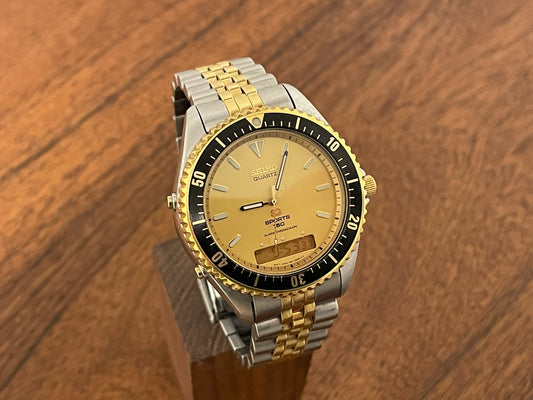
(1991) Seiko H601-8081 Sports 150 Alarm Chronograph (NOS)
Regular price €0,00 EURRegular price -
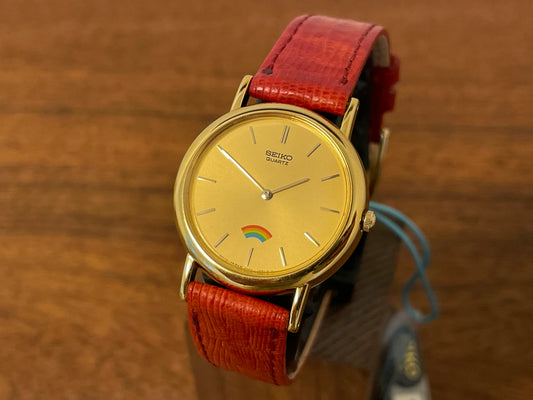
(1992) Seiko 4N00-0711 Quartz "Arcobaleno" dress watch - gold dial w/ rainbow logo - small size (NOS)
Regular price €0,00 EURRegular price -
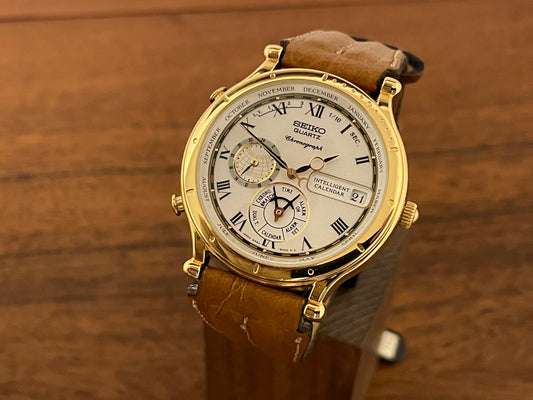
(1992) Seiko 6M23-8000 Age of Discovery (AOD) "dancing hands" intelligent calendar - gold case w/ white speckled dial (NOS)
Regular price €0,00 EURRegular price -
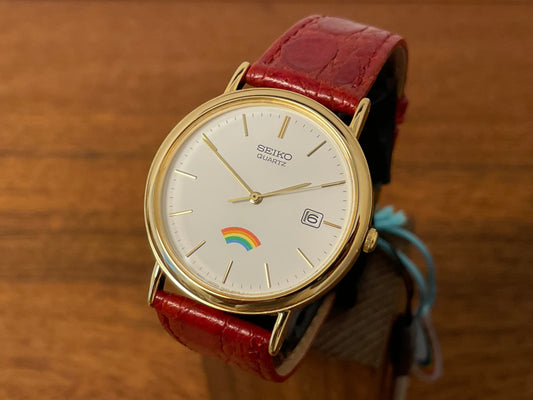
(1992) Seiko 7N22-8A00 Quartz "Arcobaleno" dress watch - white dial w/ rainbow logo (NOS)
Regular price €0,00 EURRegular price -
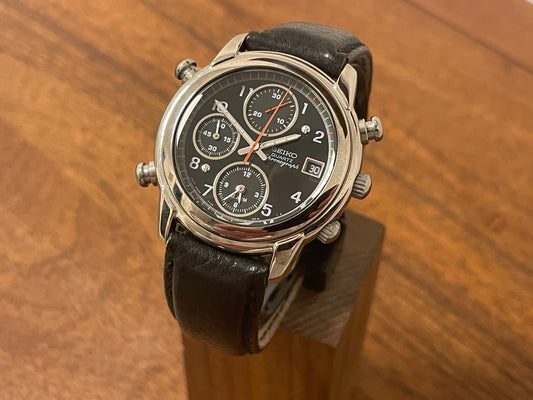
(1992) Seiko 7T32-6D4A Quartz big pusher chronograph - silver case - black dial w/ white Arabic numerals (NOS)
Regular price €0,00 EURRegular price -
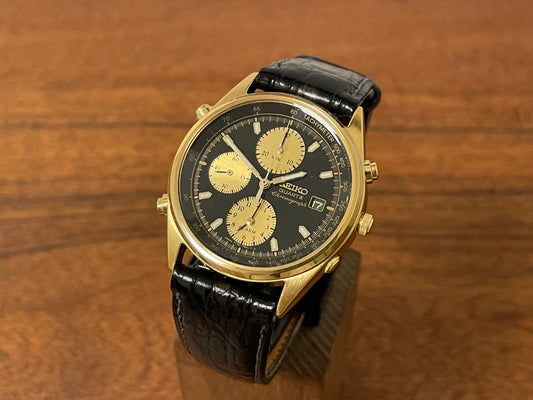
(1992) Seiko 7T32-7B3B “John Player Special” chronograph - black & gold
Regular price €0,00 EURRegular price -

(1992) Seiko 7T39-7A00 Age of Discovery (AOD) chronograph - gold case w/ white speckled dial (NOS)
Regular price €0,00 EURRegular price -
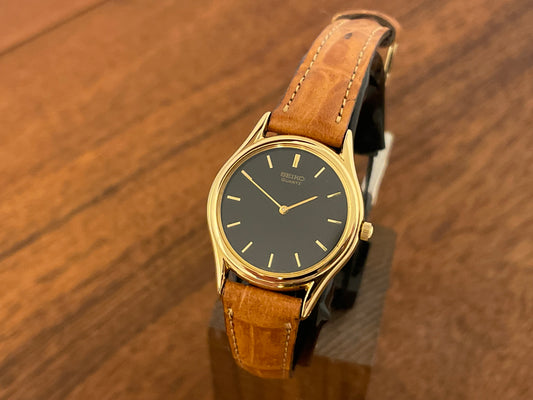
(1993) Seiko 4N00-0591 dress watch - gold bezel w/ black dial and gold markers - small size (NOS)
Regular price €0,00 EURRegular price -
(1993) Seiko 6530-5120 dress watch- oval black case w/ gold bezel en hands (NOS)
Regular price €0,00 EURRegular price -
(1993) Seiko 7T32-6F00 Chronograph - cream dial with Roman numerals
Regular price €0,00 EURRegular price -
(1994) Seiko 6m13-0010 Age of Discovery (AOD) Perpetual Calendar - gold colored case - white dial w/ black Roman numerals
Regular price €0,00 EURRegular price -
(1994) Seiko 7N00-S007 "Gold" 18K gold collection dress watch - 18k solid gold case - white dial w/ gold markers
Regular price €0,00 EURRegular price





Featured vintage watch collections
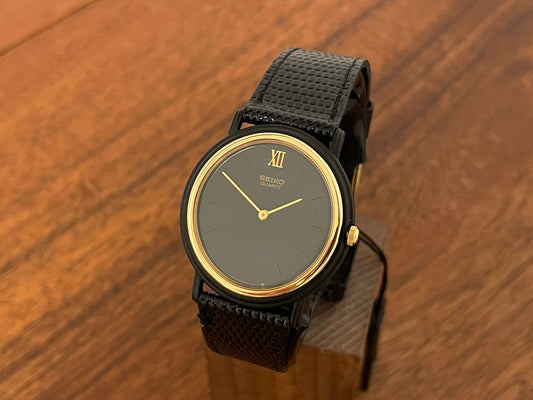
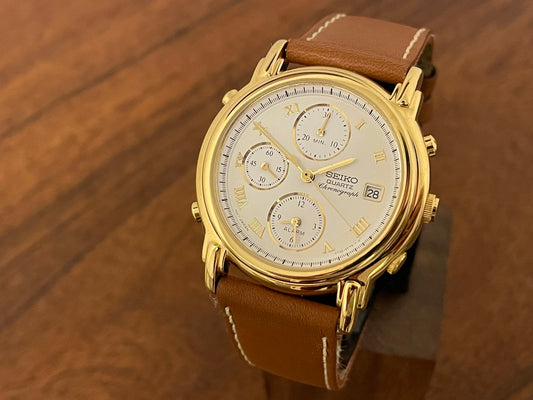
Explore some of the most popular categories within our vintage watch collection, from New Old Stock (NOS) watches and vintage chronographs to elegant dress watches and other collector favourites.
-
 Shop NOS watches
NOS (New Old Stock) watches
Explore rare NOS watches that have remained unworn since their production date, offering exceptional originality.
-
 Shop chronographs
Vintage chronographs
Discover vintage chronographs featuring mechanical stopwatch complications, iconic designs and strong collector appeal.
-
 Shop dress watches
Vintage dress watches
Browse elegant vintage dress watches known for their refined proportions, timeless styling and everyday versatility.


Other popular vintage watch collections
-
Shop new in stock
New in stock vintage watches
-
Shop solid gold watches
Vintage solid gold watches
-
Shop Tank watches
Vintage Tank watches
-
Shop Ellipse watches
Vintage Ellipse watches
-
Shop small size watches
Vintage small size watches
Vintage Watch FAQ
Find answers to some of the most common questions about vintage watches, condition, authenticity and collectability.
Collapsible content
What is a vintage watch?
A vintage watch represents a specific period in watchmaking history, reflecting the design, technology, craftsmanship and character of its era. While definitions vary, WATCH WAVE uses the following classification:
- Antique watches: produced before 1930
- Vintage watches: produced between 1930 and 1980
- Neo-vintage / retro watches: produced between 1980 and 2010
- Modern watches: produced after 2010
As a result, this collection includes not only vintage watches, but also selected neo-vintage and modern watches that fit the overall character and collecting philosophy of WATCH WAVE.
What is the difference between a vintage and a neo-vintage watch?
Vintage watches are generally considered watches produced between 1930 and 1980, while Retro/neo-vintage watches are typically produced between 1980 and 2010.
Beyond age, the difference often lies in design and technology. Vintage watches were produced during the original era in which their design language, materials and movements were developed. Neo-vintage watches often retain much of the character and proportions of earlier decades while benefiting from more modern manufacturing techniques, improved water resistance, sapphire crystals and enhanced reliability.
At WATCH WAVE, neo-vintage watches are appreciated for combining classic design with many of the practical advantages of more modern watchmaking.
Are vintage watches suitable for daily wear?
Many vintage watches can be worn daily, provided they are in good condition and have been properly maintained. However, vintage watches are generally more delicate than modern watches and should be treated with greater care.
Unless stated otherwise, WATCH WAVE recommends avoiding exposure to water, excessive humidity and condensation. Vintage watches are also generally not intended for sports, heavy physical activity or situations where they may be exposed to strong shocks or heavy vibrations.
With appropriate care and realistic expectations, many vintage watches can be enjoyed regularly for years to come.
What does NOS mean?
NOS stands for New Old Stock. These are watches that were produced years or even decades ago but remained unsold and unworn. As a result, NOS watches are often found in exceptionally well-preserved condition and can still retain original elements such as stickers, tags, boxes or paperwork.
To learn more about NOS watches, browse our dedicated NOS collection or read our in-depth guide on what New Old Stock means and why these watches are highly sought after by collectors.
How can I assess the condition of a vintage watch?
When evaluating a vintage watch it is important to consider factors such as originality, case condition, dial condition, service history and the presence of original parts. Detailed photographs and descriptions can help provide a complete picture of a watch's condition.
At WATCH WAVE, product pages are designed to provide as much relevant information as possible, including condition, dimensions, production period, movement type, originality and service history. Our goal is to present vintage, neo-vintage and modern watches as transparently as possible, allowing collectors and enthusiasts to make informed decisions.
If you have any additional questions about a specific watch, we are always happy to help.
Why are vintage watches collectible?
Vintage watches are appreciated for their history, design, craftsmanship and individuality. Many collectors value the unique character of vintage watches, as well as their connection to specific periods, brands and milestones in watchmaking history.
Unlike modern mass-produced watches, vintage watches often offer distinctive designs, discontinued references and historical significance that cannot be replicated today.
For many collectors, a vintage watch is also a tangible connection to a particular era. Whether it is a birth-year watch, an anniversary gift, a retirement milestone or a reminder of a specific period in time, vintage watches often carry a personal story that goes beyond their practical function.
Discover your link to the past with TIMEMATCH and find vintage watches from a year that matters to you.
Discover the brands in our vintage watch collection
Browse vintage watches from respected Japanese, Swiss and international watchmakers. From Seiko and Citizen to Omega, Longines and Tissot, explore dedicated collections organised by brand.








What to look for when buying a vintage watch
-
Condition
Vintage watches range from unworn New Old Stock (NOS) pieces to previously worn examples that have developed character over decades of use. Original finishing, sharp case lines, patina and overall preservation can all influence a watch’s appeal and collectability. Rather than focusing solely on labels such as “NOS” or “used”, it is important to evaluate the photographs, condition notes and overall presentation of each individual watch.
-
Service history
The service history of a vintage watch provides insight into its technical condition and long-term reliability. Mechanical watches may require periodic cleaning, lubrication and adjustment, while quartz watches can require battery replacement or attention to ageing electronic components. At WATCH WAVE, product listings indicate whether a watch has been serviced and provide details about its current condition, helping collectors and enthusiasts make informed purchasing decisions.
If you would like additional information regarding the servicing history or current operating condition of a specific watch, you are always welcome to contact us. -
Authenticity
Authenticity is one of the most important considerations when buying a vintage watch. Components such as the dial, hands, crown, bracelet, caseback and movement all contribute to a watch’s originality and historical character. Over the decades, some watches may have received replacement parts during servicing or repair. Understanding which components remain original helps collectors evaluate both the authenticity and collectability of a vintage timepiece.
If you would like additional information regarding the originality or configuration of a specific watch, please feel free to contact us. -
Size
Vintage watches are often smaller than their modern counterparts. While 32 mm to 36 mm was considered a standard men's size for much of the twentieth century, modern watches are often significantly larger.
Case diameter is only part of the story. Factors such as lug-to-lug length, case shape and dial design can have a significant impact on how a watch wears on the wrist. A well-proportioned 34 mm vintage watch can often wear larger than expected, while some larger watches may wear surprisingly compact.
At WATCH WAVE, every product page includes detailed size specifications to help you determine whether a watch is the right fit for your wrist and personal preferences.